GOOD, BAD OR NO CREDIT - FINANCING FOR ALL CREDIT TYPES!

GOOD, BAD OR NO CREDIT - FINANCING FOR ALL CREDIT TYPES!

Purchasing a pre-owned vehicle is a significant investment, and being prepared can make all the difference between driving away happy and facing unexpected issues down the road. For buyers in Rhode Island, knowing the right questions to ask is your most powerful tool. This guide is designed to empower you with the knowledge needed to confidently navigate the used car buying process. By asking about a car's history, its current condition, the details of the sale, and financing, you can uncover crucial information that isn't always obvious. A transparent dealership will welcome your questions and provide clear, honest answers. Arming yourself with this checklist will help ensure you find a reliable and affordable vehicle that perfectly fits your needs and budget, giving you peace of mind with your purchase. Let us help you make an informed decision and find the right car for you today.
Now that you are equipped with the key questions for your search, the next step is finding a dealership that values transparency and customer satisfaction. We pride ourselves on creating an open and honest environment where your questions are encouraged. Our team is ready to provide detailed vehicle history reports, full mechanical overviews, and clear financing details. We invite you to explore our extensive inventory of quality used cars and put our commitment to the test. Let us show you how a trustworthy car buying experience feels.
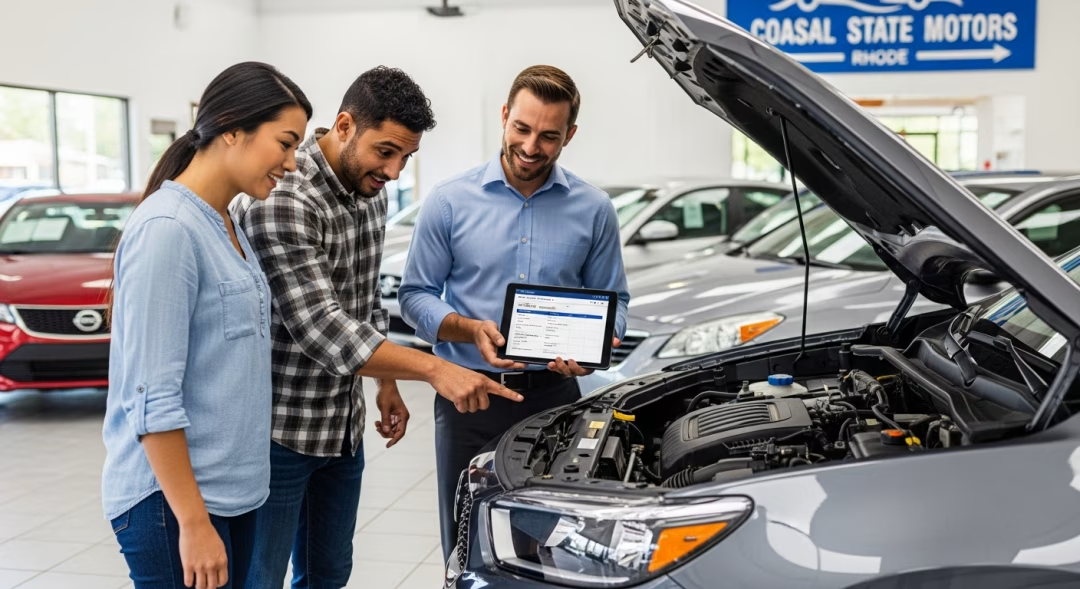
Navigating the used car market can feel overwhelming, but with a structured approach, you can take control of the process. The key is to gather as much information as possible before making a final decision. We have broken down the essential questions into four key categories: vehicle history, mechanical condition, pricing and financing, and the dealership process. Asking these questions will help you build a complete picture of the vehicle you are considering and ensure there are no surprises after you drive off the lot.
A car’s history is a fundamental indicator of its future reliability. These questions help you understand where the vehicle has been and how it has been treated by previous owners.
This is the most critical first question. A CARFAX or AutoCheck report is essential. It provides a detailed summary of the car's life, including accident history, title status (e.g., salvage, rebuilt), odometer readings, and the number of previous owners. A reputable dealer will readily provide this report. If they hesitate or cannot produce one, consider it a major red flag.
While a history report is great, service records provide a deeper look into the car's upkeep. Records of regular oil changes, tire rotations, and major services (like timing belt replacements) show that the previous owner was diligent. Consistent maintenance is the best predictor of a long and healthy vehicle life.
Even if the history report is clean, always ask this question directly. Sometimes minor incidents are not reported. If the answer is yes, follow up by asking about the extent of the damage and for copies of the repair records. Look for signs of shoddy repair work, such as mismatched paint or uneven body panel gaps.
Was it a local trade-in, an auction purchase, or a former rental car? A local trade-in often comes with a more complete history. Cars from auctions, especially those from regions with harsh weather like heavy snow and salt (common in New England), may have a higher risk of rust and undercarriage damage.
Beyond its history, you need to know the car's current state. This involves both a visual inspection and understanding its mechanical soundness. This is where you can schedule a test drive to experience the car firsthand.
A dealership confident in its inventory should have no problem with you taking the vehicle to your own trusted mechanic for a pre-purchase inspection (PPI). This is a small investment that can save you thousands in the long run by identifying potential issues the dealer may have missed. If a dealer refuses, you should walk away.
Dealers inspect and service vehicles before putting them up for sale. Ask for a list of the work that was done. Did they replace the tires? Perform a brake job? Change the oil and other fluids? This shows what they have invested in the car and gives you insight into its condition upon arrival at the lot.
This is another direct question that puts the salesperson on the spot. While they may not disclose every minor flaw, their answer can be revealing. It is always best to verify their claims with your test drive and the independent inspection.
The sticker price is just the beginning. Understanding the total cost, including financing and fees, is crucial for budgeting. Our team is ready to discuss affordable and accessible financing options, regardless of your credit history.
Ask for a breakdown of all costs, including the vehicle price, documentation fees, state taxes, title and registration fees, and any other charges. This final number is what you will actually pay. Unscrupulous dealers may try to pad the price with unnecessary add-ons or inflated fees, so be sure to review this itemized list carefully.
Even if you have pre-approved financing from your bank, see what the dealership can offer. We specialize in finding solutions for all credit situations, including bad credit car loans in Rhode Island and even options for those with no credit. Ask about the interest rate (APR), the loan term (length), and the estimated monthly payment. Understand the difference between our Lease Here Pay Here and Buy Here Pay Here programs to see which is right for you.
Some used cars are sold "as-is," while others may come with a limited dealer warranty or the remainder of the factory warranty. Clarify what is covered and for how long. If a warranty is included, get the terms in writing. Ask about the availability and cost of an extended warranty, but be sure to read the fine print to understand what it actually covers.
If you plan to trade in your current car, ask how they arrived at their offer. You can get an estimate beforehand on our website to value my trade. Understanding their valuation process, which considers factors like condition, mileage, and market demand, can help in your negotiation.
The dealership you buy from is just as important as the car you choose. A positive relationship with a reputable dealer can make the entire ownership experience better. Learn more about us and our commitment to the community.
While not always available, some dealerships offer a short window (e.g., 3 days or 150 miles) to return or exchange the vehicle if you are not satisfied. Knowing this policy upfront can provide an extra layer of confidence in your purchase.
Never feel rushed into signing a contract. A trustworthy dealer will allow you to take your time and read through every document, including the bill of sale, financing agreement, and any warranty information. Ensure all agreed-upon terms, prices, and repairs are documented in writing.
A vehicle history report is your first line of defense against buying a car with a troubled past. It reveals critical information like previous accidents, flood damage, title issues (such as a salvage or rebuilt title), and potential odometer fraud. Without it, you are buying blind and could end up with a vehicle that is unsafe or will cost you a fortune in future repairs. A clean report from a reputable source like CARFAX or AutoCheck provides peace of mind.
If a dealer refuses to let you take the car to your own mechanic for a pre-purchase inspection, you should walk away from the deal immediately. This is a major red flag. A transparent and confident seller has nothing to hide and will understand your desire for an unbiased, expert opinion on the vehicle's condition. A refusal almost always means they know about a problem they do not want you to discover.
Negotiation starts with research. Know the car's market value by checking online guides like Kelley Blue Book or Edmunds. Use any issues found during your test drive or independent inspection as leverage. Always negotiate the "out-the-door" price, not the monthly payment. Be polite but firm, and be prepared to walk away if you cannot reach a price you are comfortable with. Knowing you have other options, like our diverse used car inventory, is your best negotiating tool.
In Rhode Island, you should expect to pay for the vehicle, state sales tax (currently 7%), a title fee, and registration fees. Most dealerships also charge a "documentation fee" or "doc fee" for processing the paperwork. While this fee is common, be wary of excessively high amounts or other mysterious charges. Always ask for an itemized list of every single fee to get the final out-the-door price before you agree to buy.
Absolutely. Many people face credit challenges, and specialized dealerships are here to help. We offer guaranteed car financing programs designed for individuals with bad credit, no credit, or a history of bankruptcy. These programs focus more on your current ability to pay than on past mistakes. You can even get a head start by completing a pre-qualification application on our website.
