GOOD, BAD OR NO CREDIT - FINANCING FOR ALL CREDIT TYPES!

GOOD, BAD OR NO CREDIT - FINANCING FOR ALL CREDIT TYPES!
Embarking on the journey to purchase a pre-owned vehicle in Providence, Rhode Island, is an excellent way to secure reliable transportation without the significant cost of a brand-new car. The key to a successful purchase is knowledge. Understanding what to look for transforms you from a hopeful buyer into a confident consumer, capable of spotting both great deals and potential problems. This guide is designed to arm you with the essential information needed to inspect a vehicle thoroughly, from its exterior paint to the engine's performance. Here at our dealership, we believe an informed customer is a satisfied customer. We are committed to transparency and helping you navigate our extensive inventory to find the perfect vehicle that fits your lifestyle and budget. Our team is here to support you every step of the way, ensuring your next car purchase is a smooth and positive experience.
Our commitment extends beyond just selling cars; we focus on building lasting relationships with our community in Providence and beyond. We understand that every customer's situation is unique, which is why we offer a wide range of affordable and accessible financing options tailored to your specific needs. Whether you have excellent credit, are rebuilding your score, or are a first-time buyer, our finance experts are skilled at finding solutions. You can even get pre-qualified online to see where you stand before you visit.
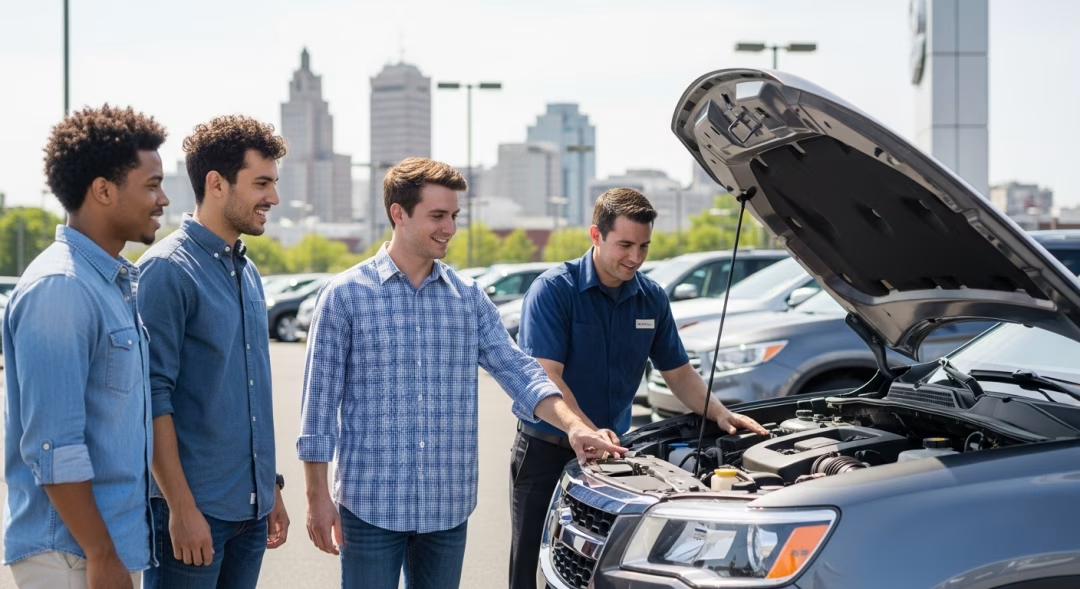
Buying a used car is a significant investment. Making the right choice requires careful research, a detailed inspection, and a thorough test drive. The unique driving conditions in Providence, from city traffic to winter weather with salted roads, make certain checks even more critical. This comprehensive guide will walk you through every essential step.
Before you even visit a dealership, the most important work happens at home. A solid plan will prevent you from making an impulsive decision and ensure your new vehicle fits comfortably into your financial life.
First, establish a realistic budget. This goes beyond the sticker price of the car. You must account for taxes, title and registration fees, and car insurance. In Rhode Island, these costs can add a significant amount to your initial outlay. Furthermore, it is wise to set aside a small fund for potential initial maintenance, like an oil change or new wiper blades. If you are working with a challenging credit history, do not worry. We specialize in providing bad credit car loans in Providence, RI, and can help you understand your payment options.
Next, research vehicle types and models that fit your needs and have a reputation for reliability. Consider your daily commute, family size, and cargo needs. A fuel-efficient sedan might be perfect for commuting downtown, while an all-wheel-drive SUV could provide more confidence during New England winters. Explore our current vehicle inventory online to see what models are available in your price range.
Once you have a car in your sights, a detailed visual inspection of the exterior can reveal a lot about its history. Take your time and look closely in good light.
The inside of the car is where you will spend your time, so make sure it is in good shape and everything works as it should.
The test drive is your best opportunity to assess the car's mechanical health. Plan a route that includes a mix of Providence city streets, bumpy roads, and a stretch of highway to test the car at different speeds. Before you go, feel free to schedule a test drive with our team.
During the drive, turn the radio off and pay attention to how the car sounds and feels. Listen for any knocking or ticking from the engine. Do you hear any clunking or rattling from the suspension when going over bumps? When you apply the brakes, the car should stop smoothly and in a straight line without any grinding noises or pulsing in the pedal. On the highway, the car should feel stable, and the steering should be responsive without pulling to one side. Test the transmission by accelerating smoothly and ensuring the gears shift without hesitation or jerking.
A car's past can predict its future. Always request a Vehicle History Report (VHR) from a service like CarFax or AutoCheck. At our dealership, we provide these reports for your peace of mind. The report will show you crucial information, including accident history, title status (check for salvage, rebuilt, or flood titles), odometer readings, and sometimes even service records.
Also, ask to see the vehicle's title to ensure the person or dealership selling the car is the legal owner. This is also a good time to discuss your trade-in. You can get a head start by using our online tool to value my trade.
For ultimate confidence, consider a pre-purchase inspection (PPI) by a qualified, independent mechanic. They can put the car on a lift and spot issues that are not visible during a standard inspection, such as frame damage or developing leaks.
Once you have found the right car and are confident in its condition, the final step is securing financing. This process can be stressful, especially for those concerned about their credit. We pride ourselves on being one of the most trusted in-house financing car dealers in Providence, RI. We work directly with you to find a loan that works, offering guaranteed car financing solutions to help you get on the road.
The national average is around 12,000-15,000 miles per year. For a five-year-old car, mileage between 60,000 and 75,000 is typical. However, a vehicle with higher mileage that has been meticulously maintained can be a better value than a low-mileage car that was neglected. Always prioritize the vehicle's condition and service history over the odometer reading alone.
Absolutely. Many people face credit challenges, and we specialize in helping them. As a leading Buy Here Pay Here dealership in Providence, RI, we offer in-house financing solutions. We look at more than just your credit score, focusing on your ability to make payments. We offer programs for bad credit and even for those with no credit history at all.
The biggest factor is road salt used during winter, which accelerates rust and corrosion. It is crucial to inspect the undercarriage, frame, brake lines, and exhaust system for excessive rust. Additionally, potholes from freeze-thaw cycles can be tough on suspension components, so listen carefully for noises during your test drive.
While reputable dealerships like ours perform thorough inspections on every vehicle before listing it for sale, an independent inspection can offer an extra layer of peace of mind. It provides an unbiased, third-party assessment of the vehicle's condition, which can be particularly valuable for buyers who are not mechanically inclined.
You will typically need a valid driver's license, proof of car insurance, and your method of payment or approved financing. If you are financing with us, you will also need proof of income (like recent pay stubs) and proof of residence (like a utility bill). Our team will guide you through all the necessary paperwork to make the process simple.
With traditional financing, the dealership connects you with a third-party lender like a bank or credit union. With Buy Here Pay Here (BHPH), the dealership is also the lender. This allows for more flexibility in approvals, making it an excellent option for buyers who may not qualify for a traditional auto loan due to their credit history.

